
PBL Update from Israel 2010
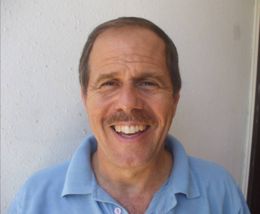 Sherman Rosenfeld |
|
1. PBL Update from Israel 2010, by Sherman Rosenfeld
2. Motivating Teachers to Enact Free-Choice Project-Based Learning: Effects of a Professional Development Model. Journal of Science Teachers, 2008
3. Bridging the Gap Between Formal and Informal Science Learning. Studies in Science Education, 1996
4. "I Can Do It!" Competition: Israeli high schoolers provide 'inventive' solutions for people with special needs, by Sharon Kanon, ISRAEL21C.Com, July 2, 2006.
5. Middle School Students Can Make a Difference: Designing Inventions for People with Special Needs. Presentation at the World Futures Society conference, May, 2008. PPT (7 megs) and accompanying Podcast.
PBL Update from Israel 2010
By Sherman Rosenfeld, shermrosenfeld@gmail.com
http://www.shermanrosenfeld.com/
Bob Pearlman asked me to give an update on the PBL scene in Israel. I'm glad to do so, largely because I'm indebted to Bob's leadership in promoting PBL for so many years. When Bob was president of the Autodesk Foundation, he organized many national conferences on PBL, allowing me to learn a great deal from my American colleagues.
I'd like to start with some background. From 1993-1998, the Israeli Ministry of Education engaged in one of Israel's largest educational reforms. Called "Tomorrow '98," this systemic initiative was aimed at improving STEM-related K-12 practices across the country. One of the funded proposals recommended by this report was to develop a middle school national curriculum to integrate science and technology for all students. Within this context, in the Department of Science Teaching at the Weizmann Institute of Science, a teaching/learning program was designed to provide students with the guidance and support to conduct research and development projects, based on the school curriculum. The program, called PBLSAT (PBL in Science and Technology) included a 3-phase teacher professional development component, support materials for teachers and students, and long-term educational research (1, 2). Over 600 teachers participated in this effort. Related efforts to motivate and support student research and development projects took place in other institutions as well, such as the Technion in Haifa and Migal in Kiryat Shmona. The latter group, in collaboration with the Weizmann Institute, created a comprehensive networked guide for suporting science and technology work called "The Golden Way," with Hebrew and Arabic versions (3).
During the past decade, the educational pendulum in Israel has swung "back to the basics," with an emphasis on enhancing and documenting student academic achievement in a variety of school subjects, largely through national and international testing. But while this change in orientation has led to a marked decline in student project work, it's not the whole story. Two recent developments, initiated by the Pedagogical Secretariat in the Ministry of Education are worth mentioning. First, a systemic national program to integrate thinking skills throughout the curriculum has been initiated; part of this program has included incentives and support for student research projects in diverse subject areas, as a component of the Israeli high-school matriculation (the Bagrut). Second, a national committee was established to prepare a comprehensive guide for educational leaders, to help them create and sustain "the culture of inquiry in schools" from K-12 and across the disciplines. The committee has met for 2 years and now is in the process of writing this guide.
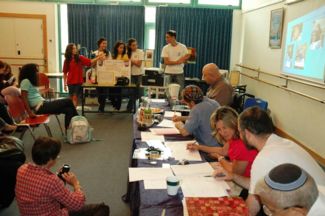
A third development is the growing connection between formal and informal education (4). One example of this trend is the national "I Can Do It!" competition, in which middle school Israeli students are invited to design inventions and devices for specific people with special needs. In each case, the student design teams need to identify the individual's specific needs and work together to create a working prototype that meets these needs. This project competition takes place in Israeli middle schools, sometimes as part of the school's formal science and technology program and sometimes as part an after-school program (5).
These three developments suggest that Israeli education may be entering a new era of "coexistence" between two educational paradigms: the conventional achievement-based paradigm and a paradigm of student-based research and the development of thinking skills.
Is this a realistic forecast or simply the daydream of an incorrigible optimist? Time will tell. Stay tuned.
Sherman Rosenfeld, a science educator, has worked at the Weizmann Institute of Science in Rehovot since immigrating with his family to Israel in 1982. Contact Sherman at shermrosenfeld@gmail.com.
References:
1. A summary of 4 related research studies is located at: http://www.designworlds.com/techscape/Sherm_ArticleLinks.html
2. Falik, O., Eylon, B-S. and Rosenfeld, S. (2008). Motivating Teachers to Enact Free-Choice Project-Based Learning: Effects of a Professional Development Model. Journal of Science Teachers, 19 (6): 565-591. (See attached file.)
3. Loria, Y., Shaltiel, L., Pieterse, E., Rosenfeld, S. (1999). "The Development of Software to Support Teachers and their Students in PBL: 'The Golden Way'." Conference Proceedings of the European Association of Research on Learning and Instruction (EARLI). University of Gothenburg, Sweden.
4. Hofstein, A. and Rosenfeld, S. (1996). "Bridging the Gap Between Formal and Informal Science Learning." Studies in Science Education, 28, 87-112. (See attached file.)
5. Ashkenazi, R. and Rosenfeld, S. (2008). Middle School Students Can Make a Difference: Designing Inventions for People with Special Needs, presentation at the World Futures Society conference, May, 2008. (See attached files of Powerpoint presentation, accompanying audio and background article).